
The Behavioral Health Services Division supports 18 Local Collaboratives across the state, giving communities a meaningful way to share their needs, priorities, and ideas for improving mental health and substance use services.
The Local Collaboratives elevate local voices, identify gaps, and help guide planning in every region.
What do New Mexico's Behavioral Health Local Collaboratives do?
Together, they help New Mexico build a more responsive, coordinated, and community‑guided behavioral health system across the state.
There are 18 local Collaboratives across NM.
Each Local Collaborative represents a different area of New Mexico, bringing together community members and local partners to share perspectives, identify service gaps, and help improve access to mental health and substance use services in their communities.
Local Collaboratives are a key component.
They help the state understand what is happening in each region and how to They help the state understand the needs and challenges in each region and identify ways to improve mental health and substance use services for people across New Mexico.
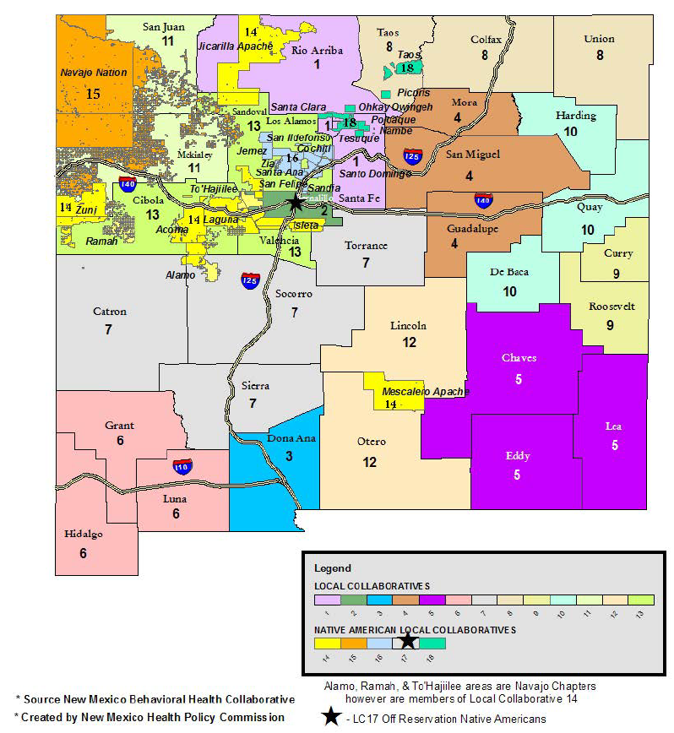
- LC 1: Santa Fe/Rio Arriba/Los Alamos
- LC 2: Bernalillo
- LC 3: Doña Ana
- LC 4: Guadalupe/Mora/San Miguel
- LC 5: Chaves/Eddy/Lea
- LC 6: Grant/Luna/Hidalgo
- LC 7: Socorro/Catron/Sierra/Torrance
- LC 8: Taos/Colfax/Union
- LC 9: Curry/Roosevelt
- LC 10: De Baca/Harding/Quay
- LC 11: McKinley/San Juan
- LC 12: Lincoln/Otero
- LC 13: Cibola/Sandoval/Valencia
- LC 14: Alamo/ Acoma/ Isleta/ Laguna/ Zuni/ Jicarilla Apache/ Mescalero Apache/Ramah/To’tlajiilee
- LC 15: Navajo Nation (except those in 14)
- LC 16: Cochiti/Jemez/Sandia/San Felipe/Santa Ana/Zia
- LC 17: Urban Tribal
- LC 18: Nambe/Ohkay Owingeh/Picoris/Pojoaque/Santa Clara/ Taos/Tesuque/San Ildefonso
Related Information
Keep Your Benefits NM
Medicaid and SNAP rules are changing. Find out what changes may affect you and what you need to do.